The Hidden Freight Cost Problem No One Talks About
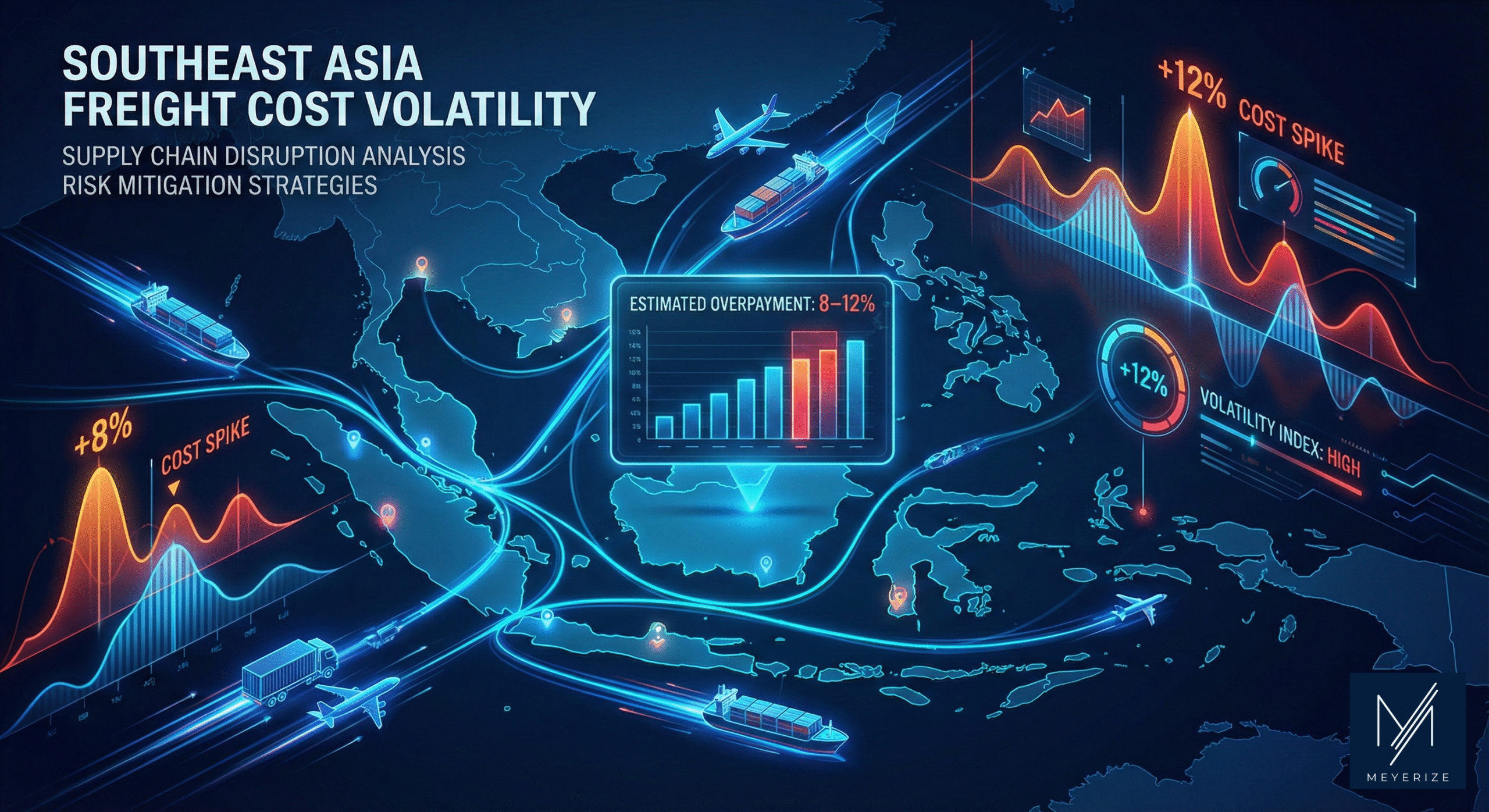
Across Southeast Asia — Thailand, Vietnam, Malaysia, Indonesia, and the Philippines — companies are unintentionally overpaying 8–12% on freight every year.
Not because carriers are dishonest.
Not because procurement teams are inexperienced.
And not because systems are outdated.
Companies overpay for one simple reason:
They do not have clear, benchmarked visibility into what they should be paying.
Freight cost has become one of the most volatile, misunderstood, and under-managed spend categories in the region. Yet it has a massive impact on supply chain performance, EBITDA, customer service, and competitiveness.
This article explains why companies overspend — and what leaders can do to regain control in 2026.
1. Chargeable Weight Errors: The Silent Profit Killer
In our audits, chargeable weight inconsistency is one of the most common and costly mistakes.
Why it happens:
- Incorrect DIM weight calculations
- Inconsistent rounding across carriers
- Wrong pallet factors
- Missing consolidation opportunities
Even a small dimensional error — just 2–3 cm — can escalate into thousands of dollars lost annually.
Impact: 2–4% unnecessary freight spend.
2. Weak Contract Structures (The “Fine Print” Problem)
Most freight contracts in Southeast Asia were not built to protect shippers. Common issues:
- Undefined surcharge rules
- Outdated contract rates still in effect
- Unclear validity dates
- Wrong minimum charge logic
- Missing alignment between contract & invoice
These small flaws create big long-term leakage — especially when volumes grow or seasonality shifts.
Impact: 3–5% cost leakage hidden in your invoices.
3. Lane-Level Pricing Blind Spots
Many leaders assume their rates are competitive because they negotiated “last year.”
But the market changes faster than annual contracts.
Without accurate lane-by-lane benchmarks, companies lose visibility into:
- Market fluctuations
- Carrier-specific rate behaviors
- Competitor pricing
- True market averages vs. premium pricing
Benchmarking answers the most critical question in freight:
“Are we paying the right price for this lane?”
In many cases, the answer is no.
Impact: 4–7% above-market spending on key lanes.
4. Over-Reliance on a Single Carrier
Loyalty is good. Dependency is not.
When a shipper relies heavily on one carrier:
- Rates drift upward
- Surcharges become less negotiable
- Performance issues become tolerated
- Market competitiveness decreases
An optimized carrier mix creates:
✔ pricing balance
✔ flexibility
✔ stability during peak season
Impact: up to 10% savings through rebalancing.
5. Poor Visibility on Surcharges & Accessorial Fees
Surcharges are often the most misunderstood and least verified part of freight billing.
Common issues:
- Unreviewed FSC/SSC
- Incorrect peak season fees
- Repeated accessorials
- Hidden admin charges
- Charges that don’t match the contract
Most companies track the base rate —
but lose control over everything else.
Impact: 1–3% unnecessary monthly cost.
6. No Freight Benchmarking = No Negotiation Power
This is the core problem.
Without benchmarking:
- You negotiate without leverage
- You accept “market rate” without proof
- You pay premiums you can’t see
- You renew contracts that are already overpriced
Benchmarking is not a “nice-to-have.”
It is the foundation for:
✔ tenders
✔ cost control
✔ negotiation
✔ carrier scoring
✔ budgeting
✔ CFO reporting
Companies with benchmarking data consistently achieve:
8–12% annual savings — sustained.
Southeast Asia’s 2026 Freight Outlook
In 2026, the region will continue to see:
- Rate instability
- Tightening capacity on certain lanes
- Surge pricing during peak months
- Variable fuel surcharges
- New customs & regulatory shifts
This volatility creates risk —
but also opportunity.
Companies with strong audit + benchmark visibility will negotiate from strength, not pressure.
What Meyerize Finds in a Typical Freight Audit
Across 3PLs, manufacturers, exporters, importers, and freight forwarders, common audit findings include:
- 11% savings opportunity
- Carrier mix imbalance
- Contract misalignment
- Routing inefficiencies
- Unnecessary air shipments
- Chargeable weight adjustments
- Invoice discrepancies
- Unclear surcharge structure
Most importantly, these savings can be implemented within 2–4 weeks, not months.
The Cost of Not Knowing
The real risk is not overpaying.
The real risk is not knowing you are overpaying.
Freight cost is one of the few spend categories where:
- savings are immediate
- impact is measurable
- results are sustainable
- ROI is guaranteed
If your team hasn’t benchmarked your lanes recently, you are almost certainly paying more than you should.
Book Your 2026 Freight Benchmark Review
Meyerize offers a comprehensive Freight Audit Package:
- Lane-level benchmark report
- Contract analysis
- Carrier mix optimization
- Surcharge audit
- Routing efficiency review
- Savings simulation
Typical savings: 8–12%
Duration: 2–4 weeks